Learning Objective #1: Examine how attitudes toward linguistic standards empower and oppress language users.
This learning objective focuses on examining how attitudes toward linguistic standards can both empower and oppress language users. We explore how standard language norms can create opportunities in education and professional settings while also marginalizing speakers of nonstandard dialects or multilingual communities. By analyzing these dynamics, we develop a deeper understanding of language, identity, and social power.
Evidence of learning:
In my synthesis essay, I discuss this with arguments and examples provided by sources.
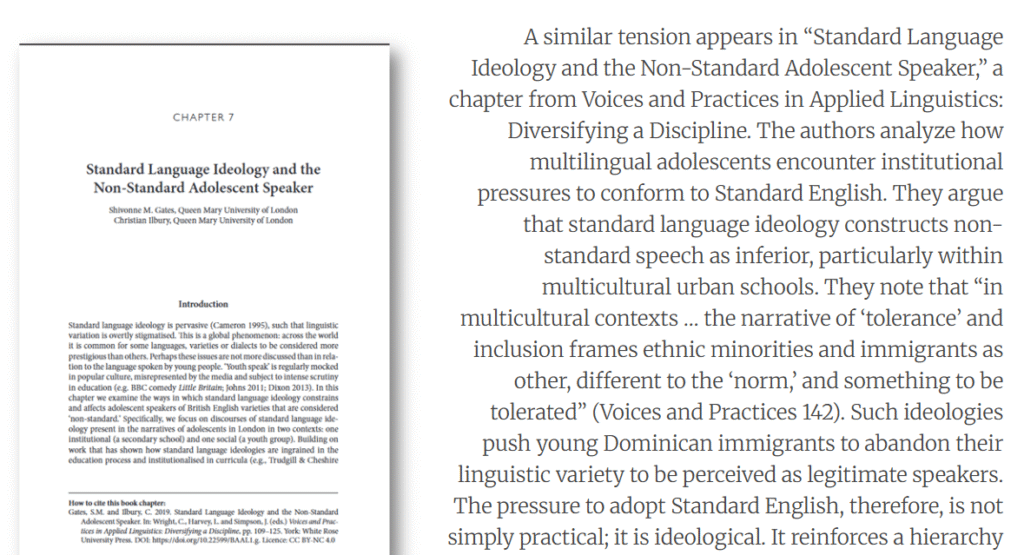
As I reread my synthesis essay, I reflected further on how this essay influenced how I view and the importance I place on speaking standard English.
My score: 4
Learning Objective #2: Explore and analyze, in writing and reading, a variety of genres and rhetorical situations.
This learning objective focuses on developing the ability to read and write across different genres while understanding the rhetorical situation of each text. It emphasizes analyzing who the author is, who the audience is, the purpose of the text, and the context in which it was written. By exploring various types of writing such as essays, articles, and academic texts students learn how meaning changes depending on genre and situation, helping them become more flexible, critical, and effective writers.
I achieved this by practicing and doing the different rhetorical situation classes that the professor gave us. Example:
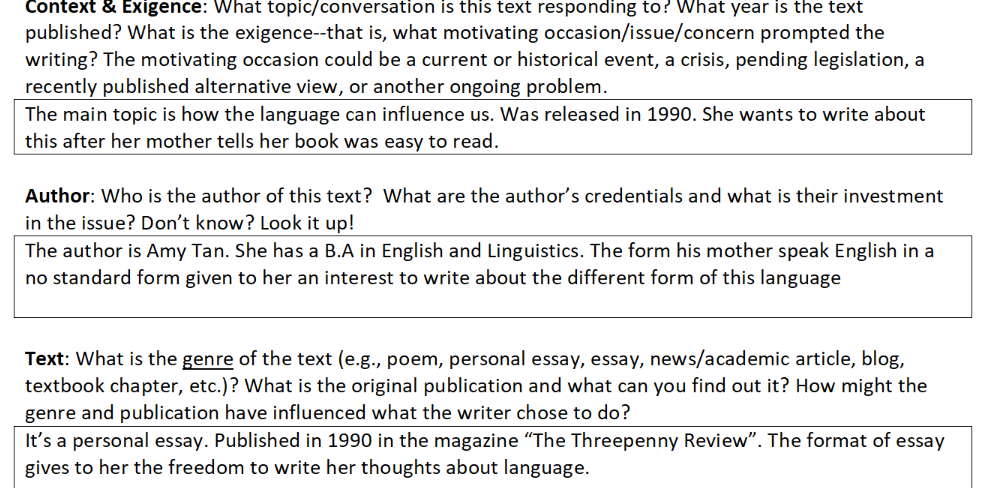
My score: 4
Learning Objective #3: Develop strategies for reading, drafting, collaborating, revising, and editing.
This learning objective focuses on building effective strategies for the entire writing process, including reading closely, drafting ideas, collaborating with classmates and the professor, revising for clarity and organization, and editing for grammar and style. By practicing these steps, we learn that strong writing is developed through revision and feedback, not just a first draft, which helps us to improve both academic and professional communication skills.
To achieve this, we wrote our first essay/draft, and I had to receive a lot of feedback in order to learn from my mistakes. Example of my LLN
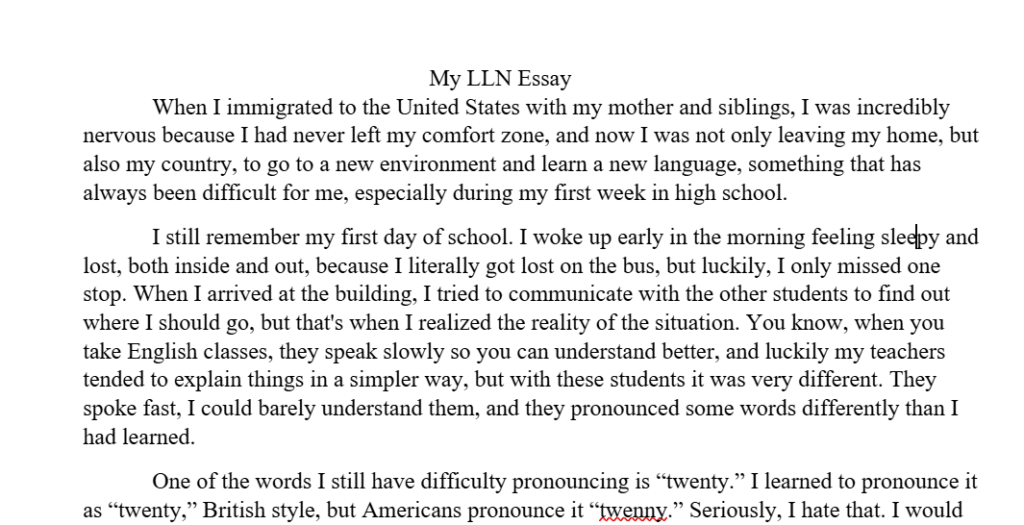
My score: 3
Learning Objective #4: Recognize and practice key rhetorical terms and strategies when engaged in writing situations.
This learning objective emphasizes recognizing and using key rhetorical terms and strategies when writing. I learn to identify concepts such as audience, purpose, tone, and appeals like ethos, pathos, and logos, and apply them effectively in their own writing. Practicing these strategies helps writers communicate ideas clearly and persuasively in different academic and real world writing situations.
I can achieve the goal of recognizing and practicing key rhetorical terms and strategies in English 110 by carefully analyzing the texts I read and applying those strategies in my own writing. When reading an article or essay, I will identify the rhetorical situation, including the author, audience, purpose, and context. I will also pay attention to rhetorical appeals such as ethos, pathos, and logos, and examine how writers use evidence, tone, and language to persuade readers.
In my writing, I will practice using these strategies intentionally by choosing appropriate evidence, organizing my ideas clearly, and adjusting my tone for my intended audience. By using rhetorical analysis worksheets, participating in class discussions, and revising my work based on feedback, I will strengthen my ability to recognize rhetorical strategies and apply them effectively in different writing situations.
To avoid repeating myself, you can see the example of the second learning objective.
My score 4.
Learning Objective #5: Understand and use print and digital technologies to address a range of audiences.
This learning objective focuses on understanding and using both print and digital technologies to communicate effectively with different audiences. We learn how to adapt their writing for various platforms, such as essays, presentations, and online sources, while considering audience needs and expectations. By using these technologies responsibly and effectively, students strengthen their ability to share ideas clearly in academic, professional, and digital environments.
The idea was to achieve this using both technological formats such as Word and paper. But I was more inclined to use Word and PDF. An example of this could be either of the two translations. Since it is both a visual and digital format.

My score: 3
Learning Objective #6: Locate research sources (including academic journal articles, magazine and newspaper articles) in the library’s databases or archives and on the Internet and evaluate those sources for credibility, accuracy, timeliness, and bias.
This learning objective emphasizes learning how to locate research sources such as academic journal articles, magazine pieces, and newspaper articles using library databases, archives, and the Internet. We also learn how to evaluate these sources for credibility, accuracy, timeliness, and bias. Developing these research skills helps ensure that academic writing is well supported, reliable, and ethically informed. In synthesis where found a good and reliable sources.
To achieve this learning objective, I had, well, we had, since it was the whole class, to go to a different room to talk about websites with reliable sources of information on any topic or discussion. I don’t have any pictures of when we went to the library. But I do have pictures of the websites. Like:

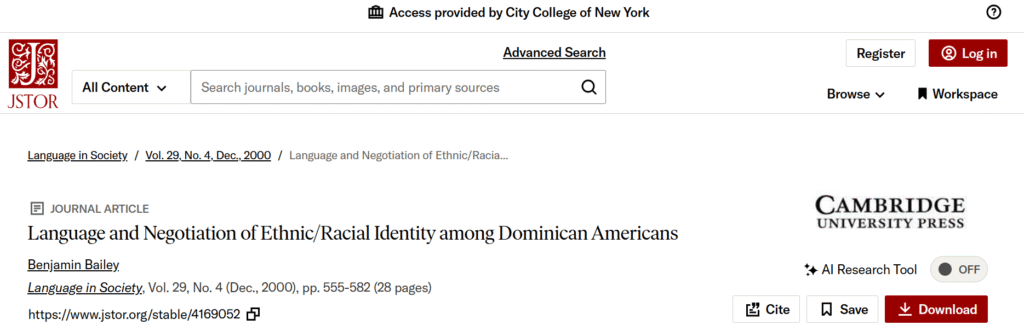
My score 4:
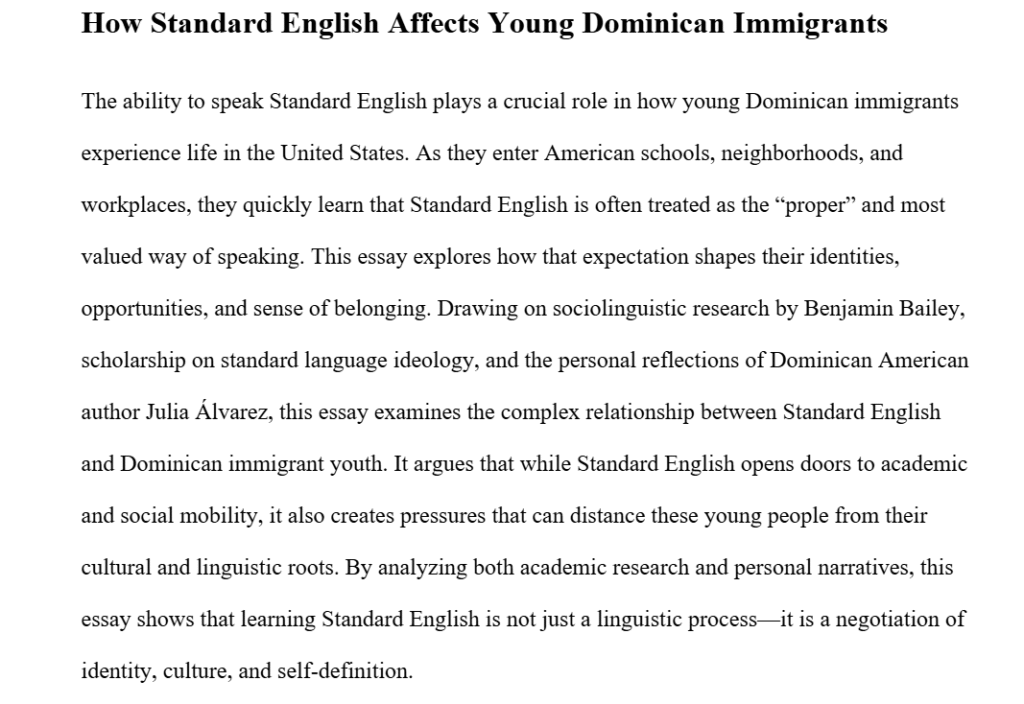
Learning Objective #7: Compose texts that integrate a stance with appropriate sources, using strategies such as summary, analysis, synthesis, and argument.
This learning objective focuses on composing texts that clearly present a writer’s stance while effectively integrating appropriate sources. I practice using Mainly my synthesis essay, also I uses strategies such as summary, analysis, and argumentation to support their ideas and engage with other perspectives. By combining their own voice with credible research, I learned to create well structured, persuasive, and academically sound writing.
To achieve this learning objective, I used my synthesis essay. Well, it was practically a requirement to meet the criteria of the learning objective in order to have an essay. One example of my essay:
My score: 4
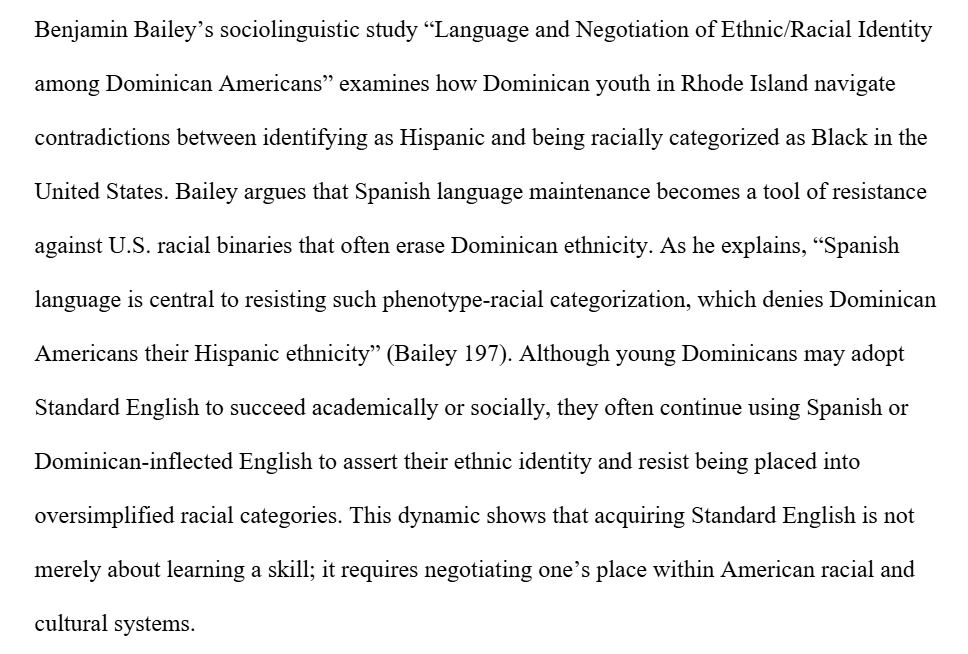
Learning Objective #8: Practice citing sources accurately and consistently.
This learning objective emphasizes practicing the systematic and consistent use of citation conventions, such as MLA format, in academic writing. We learn how to properly credit sources through in text citations and works cited pages, helping to avoid plagiarism and maintain academic integrity. Mastering citation conventions also strengthens the clarity, credibility, and professionalism of their writing.
It was practically a requirement for the synthesis essay, and thankfully, the professor recommended it to us and provided an example of how to use the MLA format for citing works. Example how I did it.
My score: 3

This entry is licensed under a Creative Commons Attribution-NonCommercial-ShareAlike 4.0 International license.

